How Australian Agriculture Is Outsmarting Climate Change
Science Victoria Edition


Partner, Corporate Value Associates (CVA) Australia
As a “farm kid” from North Central Victoria who moved on to a career in agribusiness – I have spent my entire life working in Victorian / Australian agriculture. I've lived through market crashes, severe droughts, major floods, fires and storms; I've assessed how the COVID-19 pandemic impacted Victoria’s global supply chains; and I’ve worked on preparing for animal disease outbreaks, such as foot and mouth disease.
If there is one thing all that experience has taught me, it's this: managing risk is not a new part of farming. It has always been there. What is changing is how often these risks impact, and how many of them might turn up at once.
The latest national climate assessment shows extreme heat events becoming more frequent, rainfall in the country's southeast and southwest declining even as short, heavy downpours grow more intense, and the fire season stretching longer across large parts of the country [1]. These trends ripple well beyond the farm gate, into global markets for supply and demand.

Interestingly, these shocks are not always bad news for Australian growers. Sometimes, for instance, poor seasonal conditions overseas push up commodity prices, which improves Australian farm business returns. On balance, however, the trend is moving towards greater disruption. And increasingly, it's several problems landing together rather than one at a time.
Layered on top of all this is a growing stack of policy responses: new renewable-energy generation and delivery infrastructure; rising energy prices; water buyback schemes; tightening biodiversity and land-clearing rules. Add to that, Australia's new mandatory climate reporting regime, which is progressively requiring large companies, and eventually many mid-sized ones, to disclose “scope 3” emissions. These are the indirect emissions across their entire supply chain, including from the farms that supply them [2]. Together, they add to the complexity and stress of running a farm business.
Who actually pays?
It all raises the question nobody likes answering: who pays for action on climate change and the cost of adapting to it? The honest answer is that no one wants to and, with a cost-of-living crisis, consumers cannot absorb much more at the checkout. So, if we want farmers to keep investing in sustainability and reducing emissions, we must consider interventions that can raise productivity at the same time, such as, for example, changes that improve rumen function, thus the efficiency of plant digestion, in livestock or that use fertiliser more efficiently in cropping. Both these examples can deliver lower emissions and a “profitable” response.
Where an intervention does not pay for itself naturally, we need better incentives to make action worthwhile. In a recent report on emerging farm income streams and tax policy, I explored how the tax system could help here.
One option worth serious consideration is a primary production tax credit, along the lines of the existing R&D Tax Incentive, which gives smaller companies a refundable cash offset for eligible research spending [3], or the new Critical Minerals Production Tax Incentive due to begin in 2027, which pays a refundable offset on eligible processing costs [4]. Depending on the turnover of a farm business, a similar credit could offer refundable or non-refundable support for verified sustainability and emissions-reduction work, giving cash-flow help up front as opposed to a deduction that only pays off later.
Cutting the paperwork
Alongside the money, there is a mounting burden of proving what you have done (compliance costs). Climate and nature-related reporting is only going to increase, so we need reporting systems that are automated, integrated, and simple. The concept of "one-to-many" is important in this context, so that a farmer records their data once, and then authorises trusted partners – such as regulators, customers, banks or accountants – to access what they need from that single record. It sounds like a small administrative fix, but the savings can be significant. In CVA Australia's 2025 report on horticulture compliance, we identified up to $100 million in potential compliance cost savings in the vegetable industry alone.
The fundamentals still matter
As a former rural banker, I'd be doing readers a disservice if I skipped the financial basics of risk management: a strong balance sheet; sensible use of tax and income-equalisation tools; and farm management deposits. Farmland values have risen strongly over the past decade, and bank lending to the sector remains strong with low levels of default and generally strong balance sheets in agribusiness.
Adapting, with help from new tools
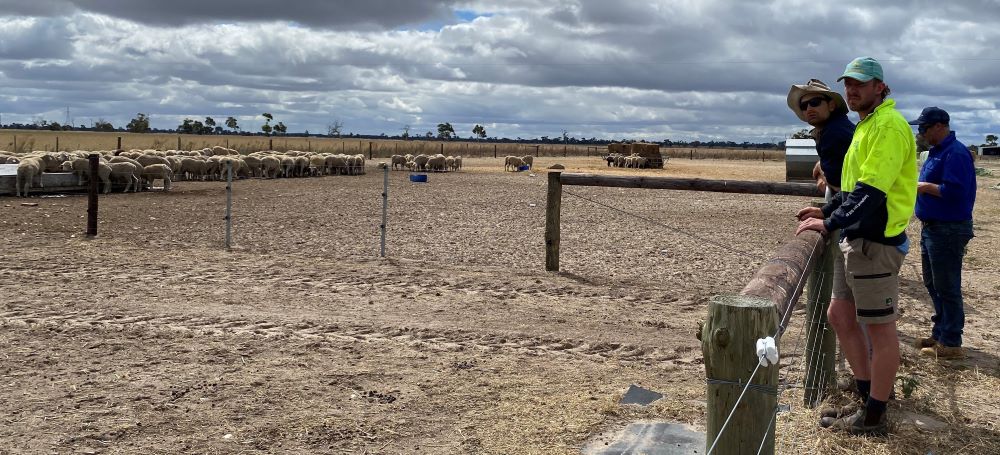
None of this is starting from scratch. Farm systems have already changed enormously since the 1982/83 and the Millennium Drought, through a mix of farmer ingenuity and structured R&D. Victoria’s farmers have made massive improvements in: tackling salinity; reducing wind and water erosion; building soil health using deep-rooted perennials (like lucerne); stubble retention and minimum tillage; reducing fertiliser loss; increasing the timeliness of sowing to maximise water use efficiency; containing stock in drought periods; encouraging flexibility of workforces in wine and horticulture; employing precision irrigation systems – the list goes on.
I expect artificial intelligence to accelerate the next stage of adaptation, from speeding up agricultural research to sharpening market and production forecasting using far richer data than we ever had access to in the past. It is not too far-fetched, for instance, to imagine every farm business having something like its own personalised weather bureau.
The reassuring part for Australians is that our farm businesses have always been good at adapting, and that the response to climate change is already well under way.
References
[1] Bureau of Meteorology & CSIRO (2024) State of the Climate 2024.http://www.bom.gov.au/weather-and-climate/past-weather-and-climate/state-of-the-climate-2024/report-at-a-glance
[2] Anthesis Group (2025) ASRS and AASB S2: A guide to mandatory climate reporting in Australia.https://www.anthesisgroup.com/au/insights/asrs-and-aasb-s2-a-guide-to-mandatory-climate-reporting-in-australia/
[3] Australian Government (2026) Overview of the R&D Tax Incentive. business.gov.au. https://business.gov.au/grants-and-programs/research-and-development-tax-incentive/overview-of-rd-tax-incentive
[4] Australian Taxation Office. (2026) Critical Minerals Production Tax Incentive.https://www.ato.gov.au/businesses-and-organisations/income-deductions-and-concessions/incentives-and-concessions/production-tax-incentives/critical-minerals-production-tax-incentive
[5] Banner image by Greg Johnson via Unsplash
Other articles of interest








Discover how you can join the society
Join The Royal Society of Victoria. From expert panels to unique events, we're your go-to for scientific engagement. Let's create something amazing.