Kim Carr - The Future of Science and Why Australia Can’t Afford to Keep Playing It Safe
The Future of Science: Why Australia Can’t Afford to Keep Playing It Safe
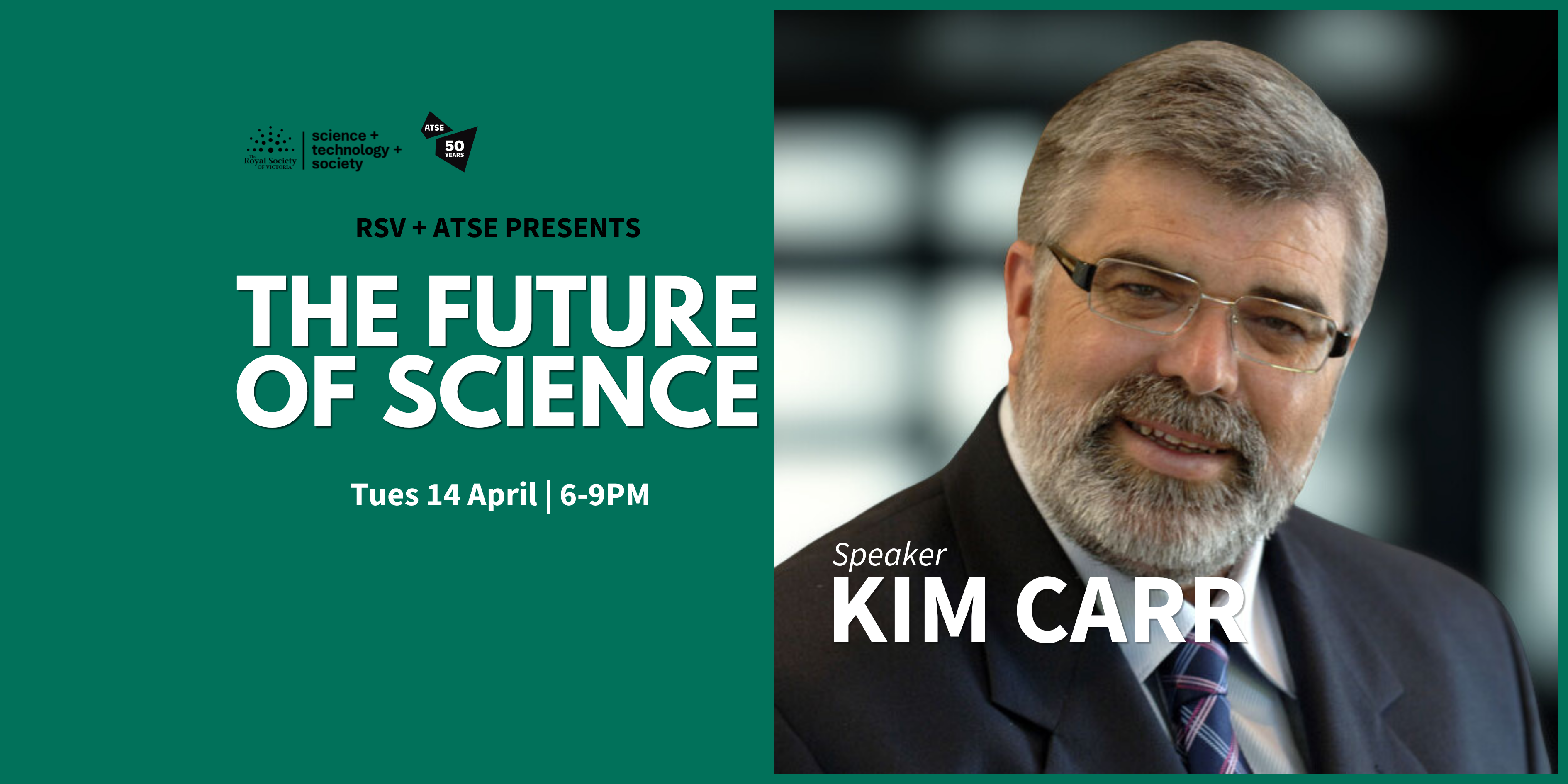
On 14 April 2026, Kim Carr, former Australian Senator and Minister for Innovation, Industry, Science and Research gave the annual ATSE lecture at the Royal Society of Victoria.
He explained that Australia is facing a defining crossroads. Between a crumbling post-war global order, a growing public trust deficit, and an economy long reliant on simply digging up resources or riding on real estate, our national prosperity is quietly running out of steam.
In what was a plain speaking lecture, Kim Carr issued a urgent wake-up call to the nation’s scientific and political establishment. If you care about the future of Australian innovation, the erosion of public trust in expertise, or how we fund the ideas that build a sovereign economy, this is a talk you cannot afford to ignore.
His key points were:
1. The Death of "Inspiring Australia" by a Thousand Cuts
Carr opened by reflecting on Inspiring Australia, the landmark national science engagement strategy he launched in 2011 as part of the broader Powering Ideas reform agenda. While surprised the program has survived for fifteen years, he warned it has been quietly subverted and stripped of its original mission:
Resource Erosion: National funding has been sliced in half over recent budget cycles, down from over $20 million to roughly $10 million.
Bureaucratic Recolonization: Core outreach hubs like Questacon have been sidelined as the program was pulled back into departmental red tape.
Ad-Hoc Fragmentation: The policy has devolved into a scattergun approach of short-term, small-scale grants ($2,000 to $20,000) aimed at political band-aids rather than long-term strategic engagement.
Carr called for an immediate, root-and-branch national review to restore a coherent, fully funded science engagement framework.
2. A Fracturing Society and the Erosion of Trust
Science no longer enjoys an automatic "free pass" when it comes to public faith. Pointing to post-2019 survey data, Carr highlighted that trust in scientific authority is steadily declining in Australia—particularly among Gen Z, who face acute economic and housing hardship, and across increasingly polarized political lines.
His message to researchers was direct: Science requires a social license to operate. It is not enough to appeal to policy makers with raw facts. Science communication must engage with how public opinion is actually formed, leveraging the humanities and social sciences to show everyday citizens that scientific innovation offers real-world solutions to their lived struggles.
3. The Economic Imperative: Move Beyond the "Lucky Country"
Drawing heavily on the recent Strategic Examination of Research and Development (SER) report—titled Ambitious Australia—Carr delivered a stark economic reality check:
Declining Prosperity: In 2002, government projections anticipated 90% GDP per capita growth over 40 years. By 2023, that projection crashed to just 57%.
The Neoliberal Trap: Treating Australia primarily as "a beach or a quarry" will no longer generate productivity. Since 1990, 90% of global technological advances have stemmed from fundamental scientific research.
The Funding Gap: Australia’s R&D spend as a percentage of GDP continues to shrink. To simply match the OECD average, Australia would need to boost its R&D investment by 43%.
Massive Returns: Every single public dollar invested in R&D yields at least $4 in economic activity.
4. Radical Reform: The Path Forward
To stop spreading $15 billion of innovation funding across 150 fragmented federal programs and 600 state initiatives, Carr backed the SER report's call for targeted, large-scale structural reform:
Focus on Key Pillars: Concentrate national funding around core strategic areas: Health, Agriculture, Defense, Energy & Environment, Resources, and Advanced Manufacturing.
Government Procurement: Stop letting Australian IP vanish overseas. Use the massive purchasing power of the state (e.g., in pharmaceuticals and defense) to build domestic industrial supply chains.
Establish a National Innovation Council: Create a cabinet-level governance body to drive coherent policy across all portfolios.
Time to make a change
Carr closed with a challenge to learned academies, universities, and researchers: get political. Polite, rational presentations behind closed doors will not overcome political risk-aversion. The scientific community must rally behind structural reform and build the public momentum needed to place R&D back at the heart of Australia’s economic identity.
Here is the full lecture
For news on the latest in science and technology in Australia subscribe.rsv.org.au
Other articles of interest






Discover how you can join the society
Join The Royal Society of Victoria. From expert panels to unique events, we're your go-to for scientific engagement. Let's create something amazing.