Food, mood, and the ageing brain
Science Victoria Edition






PHELIA HARRISON, TETYANA ROCKS & WOLF MARX
Food & Mood Centre, Deakin University
By 2066, almost one in five Australians is expected to be over the age of 65 [1]. But the question is not just how long we live, it is how well.
Researchers call this our healthspan: the years we live in good mental and physical health. And what we eat across our lives is emerging as a significant driver of how well we age. A growing field of research is putting diet at the centre of the conversation.
The science of food and mood
Nutritional psychiatry studies the relationship between diet, mental health, and brain function across a lifetime. It asks how everyday eating patterns may shape mood, resilience and cognition or thinking, and how nutrition can be included as part of broader mental health care.
Diet is increasingly recognised as a meaningful factor in mental and brain health, alongside sleep, physical activity, social connection, medical care, and psychological support. The 2020 Royal Australian and New Zealand College of Psychiatrists Clinical Practice Guidelines for mood disorders recommend dietary assessment and support as part of initial lifestyle care.[2]
Foundational work in this area is happening in Victoria. In 2013, Distinguished Professor Felice Jacka OAM established Deakin University’s Food & Mood Centre, one of the first research centres in the world dedicated to nutrition for mood and mental health. Work at the Centre now covers dietary interventions across life, gut microbiome diversity, the role of nutrients in mental and brain health, and how to translate evidence into real-world care.
One of the clearest examples of this work is the SMILES trial [3], the first randomised, controlled trial to show that dietary support can improve symptoms in people with major depression. It helped shift the question from whether diet might impact mental health, to how, for whom, and under what circumstances dietary change can help.
How the evidence accumulated
It was not always this way. Three decades ago, the idea that what you eat could meaningfully influence brain and mental health was something of a fringe notion. Nutrition was thought mostly to relate to physical health, not the brain.
That changed as large population studies began showing consistent associations between dietary patterns and the risk of depression across countries.[4] The common thread was the same everywhere: diets built around variety and whole plant foods were associated with better mental health outcomes.
Since then, the evidence has grown. There is now a substantial body of research linking Mediterranean-style dietary patterns to reduced depressive symptoms[5] and slower cognitive decline[6]. Some randomised, controlled trials suggest that dietary support can improve depressive symptoms[7] in as little as six weeks.[8] Other studies have asked more detailed questions: who benefits most; how long do changes need to be sustained; whether the composition of the gut microbiome – the trillions of bacteria, viruses and fungi living in our digestive systems – can predict responses; and how nutrition can be integrated into routine care.
These questions are especially important for ageing populations. Depression, cognitive decline, and chronic disease are most likely to erode the extra years of life that Australians are gaining. Even modest dietary effects on risk or resilience, sustained across a population, could be significant.
Your gut is talking to your brain
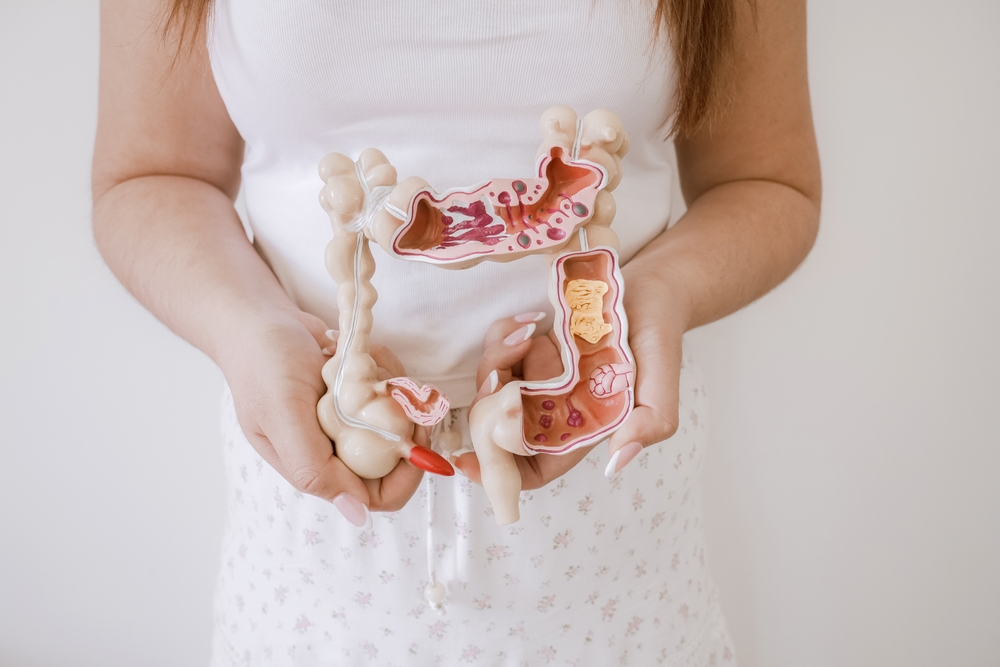
One reason diet is likely to impact healthy ageing is that the gut and brain are in constant communication. Scientists call this the microbiome-gut-brain axis.
Central to this relationship is the gut microbiome. What we eat shapes the composition and diversity of these microbial communities. Diets rich in variety and whole plant foods support the gut microbiome’s health, increasing the abundance of beneficial bacteria that produce short-chain fatty acids.[9]
Short-chain fatty acids are helpful compounds made when gut bacteria break down dietary fibre. They are thought to play a role in regulating inflammation and maintaining the gut barrier, both of which may be relevant to brain and mental health.[10][11]
Researchers are still working out the cause and effect, but several possible pathways keep cropping up. A less diverse microbiome, often associated with diets low in variety and whole foods, may alter the integrity of the gut lining. When this lining becomes more permeable, compounds that drive chronic inflammation can enter the bloodstream, potentially further eroding microbiome diversity. Research increasingly links chronic inflammation to cognitive decline and depression later in life. The good news is that changes in diet can help interrupt this cycle.[12]
Diet also appears to influence neuroplasticity; the brain’s ability to form new connections and repair itself. This capacity slows with age, and sustaining it matters for how well we think and feel in older age. Omega-3 fatty acids and protective plant compounds called polyphenols are among the nutrients associated with maintaining neuroplasticity.[13]
The exact mechanisms are still being investigated, but the broader message is becoming clear: the brain is not separate from the rest of the body. What supports the gut, heart, immune system and metabolism may also support the ageing brain.
Beyond superfoods and supplements
The microbiome-gut-brain axis has attracted considerable attention beyond research and clinical practice. Gut health is now a focus of the wellness industry, with probiotic supplements, prebiotic powders, and functional foods increasingly marketed for improving mood and mental clarity. It is worth being clear about what the evidence shows.
What research does not support is a single food or supplement being protective on its own. The benefit comes from building and sustaining an overall eating pattern throughout a lifetime. While meaningful microbiome shifts can begin within weeks for many people, consistency over time matters far more than perfection. Small, consistent changes compound across a lifetime.

What does this look like on the plate?
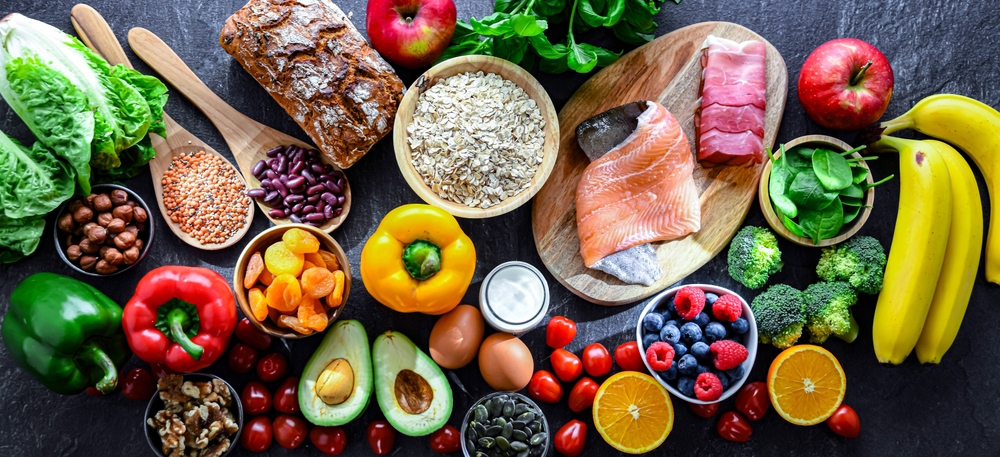
The dietary patterns that emerge consistently are built around the same core features: eating a wide variety of plant foods for fibre, polyphenols and micronutrients, and sources of healthy unsaturated fats.
This could look like adding more vegetables to your meals or snacks; swapping small amounts of meat for legumes in curries and pastas; experimenting with wholegrains like brown rice, barley or oats; using extra virgin olive oil as your main cooking oil; and mixing up your fruit across the week or including some nuts and seeds. For some, this could also include eating oily fish or walnuts a few times a week.
None of this replaces established mental health care, medication, or therapy. But the evidence increasingly supports food as a meaningful part of that picture. The most important next step may be bringing this knowledge into clinical practice, giving health professionals the confidence and tools to have these conversations.
Food is not a magic bullet. But it is a daily, practical, and powerful part of our health. As Australians live longer, the science of food, mood and longevity suggests a simple idea worth taking seriously: ageing well begins, in part, with what we put on our plate.
Want to stay up to date and get articles like this and the latest Science Victoria digital magazine delivered straight to your inbox?
Subscribe for free now at subscribe.rsv.org.au
References
[1] Australian Institute of Health and Welfare (2024), Older Australians. AIHW, Australian Government. https://www.aihw.gov.au/reports/older-people/older-australians/contents/demographic-profile
[2] Malhi, G.S. et al. (2020), The 2020 Royal Australian and New Zealand College of Psychiatrists clinical practice guidelines for mood disorders. Australian & New Zealand Journal of Psychiatry 55 (1), 7–117. https://doi.org/10.1177/0004867420979353
[3] Jacka, F.N. et al. (2017), A randomised controlled trial of dietary improvement for adults with major depression (the 'SMILES' trial)., BMC Medicine 15 (23). https://doi.org/10.1186/s12916-017-0791-y
[4] Lassale, C. et al. (2019), Healthy dietary indices and risk of depressive outcomes: A systematic review and meta-analysis of observational studies. Molecular Psychiatry 24 (7): 965–986. https://doi.org/10.1038/s41380-018-0237-8
[5] Bizzozero-Peroni, B. et al. (2025), The impact of the Mediterranean diet on alleviating depressive symptoms in adults: A systematic review and meta-analysis of randomized controlled trials. Nutrition Reviews 83 (1): 29–39. https://doi.org/10.1093/nutrit/nuad176
[6] Fekete, M. et al. (2025), The role of the Mediterranean diet in reducing the risk of cognitive impairment, dementia, and Alzheimer's disease: A meta-analysis. GeroScience 47 (3): 3111–3130. https://doi.org/10.1007/s11357-024-01488-3
[7] Firth, J. et al. (2019), The effects of dietary improvement on symptoms of depression and anxiety: A meta-analysis of randomized controlled trials. Psychosomatic Medicine 81 (3): 265–280. https://doi.org/10.1097/PSY.0000000000000673
[8] Bayes, J. et al. (2022), The effect of a Mediterranean diet on the symptoms of depression in young males (the "AMMEND: A Mediterranean Diet in MEN with Depression" study): A randomized controlled trial. American Journal of Clinical Nutrition 116 (2): 572–580. https://doi.org/10.1093/ajcn/nqac106
[9] Aslam, H. et al. (2026), Dietary interventions and the gut microbiota: A systematic literature review of 80 controlled clinical trials. Journal of Translational Medicine 24 (39). https://doi.org/10.1186/s12967-025-07428-9
[10] Cryan, J.F. et al. (2019), The microbiota-gut-brain axis. Physiological Reviews 99 (4): 1877–2013. https://doi.org/10.1152/physrev.00018.2018
[11] McGuinness, A.J. et al. (2022), A systematic review of gut microbiota composition in observational studies of major depressive disorder, bipolar disorder and schizophrenia. Molecular Psychiatry 27 (4): 1920–1935. https://doi.org/10.1038/s41380-022-01456-3
[12] Berding, K. et al. (2021), Diet and the microbiota-gut-brain axis: Sowing the seeds of good mental health. Advances in Nutrition 12 (4): 1239–1285. https://doi.org/10.1093/advances/nmaa181
[13] Marx, W. et al. (2021), Diet and depression: Exploring the biological mechanisms of action. Molecular Psychiatry 26 (1): 134–150. https://doi.org/10.1038/s41380-020-00925-x
[14] All images from Shutterstock
Other articles of interest







Discover how you can join the society
Join The Royal Society of Victoria. From expert panels to unique events, we're your go-to for scientific engagement. Let's create something amazing.