From potato peelings to packaging and pills
Science Victoria Edition
Monash University
Australia collectively wastes 7.6 million tonnes of food every year [1] ; households typically more than 4 kg a week [2] . This costs the economy an estimated $36.6 billion annually.
And all that food rotting in landfill without oxygen produces methane, a gas about 28 times more potent than carbon dioxide at trapping heat in the atmosphere. [3]
So, after we grow our food, water it, fertilise it, harvest it, refrigerate it and move it around the country, we bury the remains in landfill and thereby produce gases which accelerate climate change.
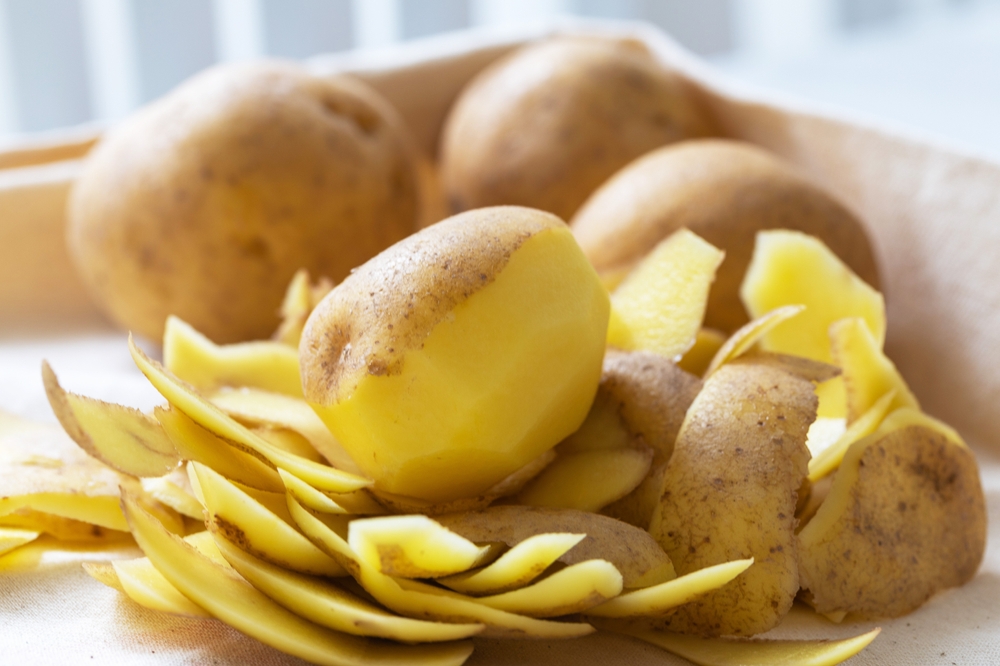
Surprisingly, it’s not supermarkets or kitchens that are responsible for much of this food waste. It is the potato peel stripped off at the processing plant, the fruit that failed a cosmetic grading test at the packing shed, and the vegetable oil with the strange colour. These streams of food waste are enormous. What’s more, they are concentrated in one place and consistent in composition. In fact, to chemical and materials engineers, they look less like rubbish and more like free, raw material heaven.
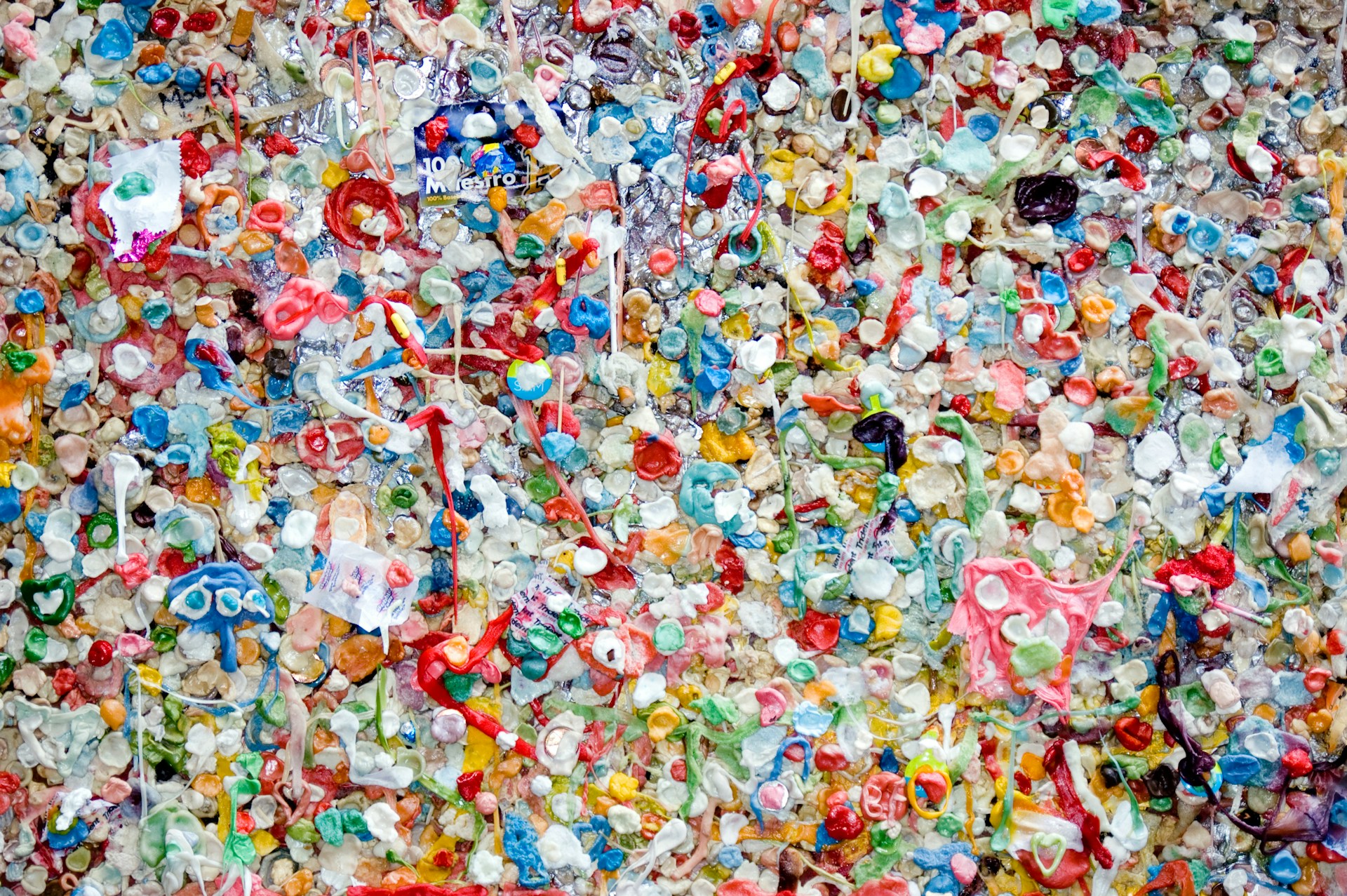
But there is another associated accumulating waste problem. It usually arrives wrapped around the first. The world makes more than 400 million tonnes of plastic each year [4], most of it from fossil fuels, much of it only used once and then thrown away. Plastic packaging keeps our food fresh and our medical equipment sterile, but the material outlives its purpose by centuries. The plastic buried today will still be recognisably plastic when your great-great-grandchildren are alive.
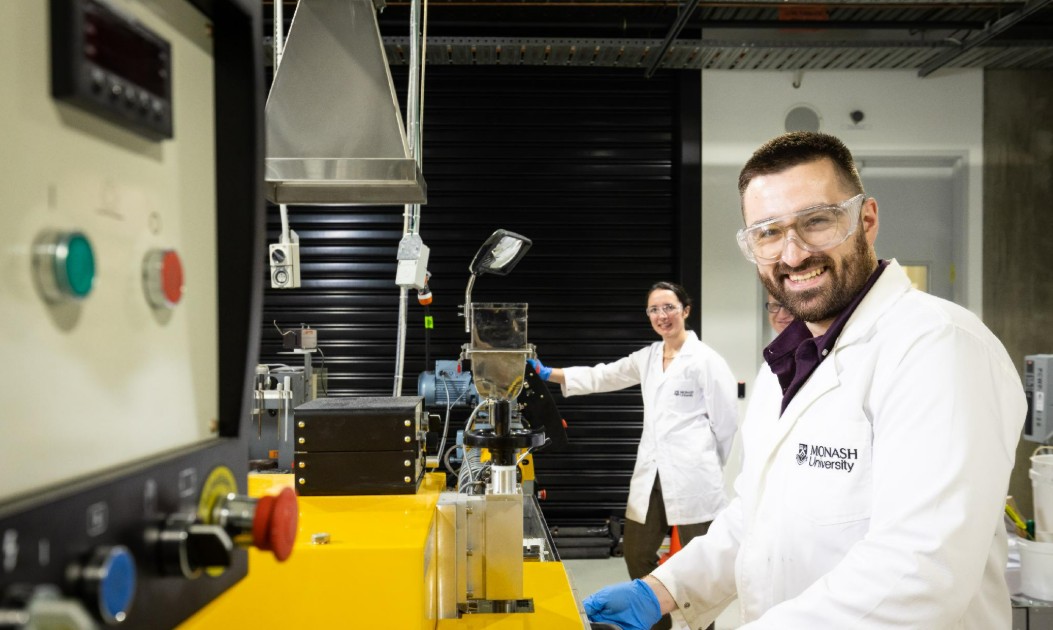
At Monash University, researchers from across the Faculties of Engineering, Science, and Pharmacy and Pharmaceutical Sciences have been collaborating to see if the first problem could be used to solve the second.
What if the peel could become the packaging, and perhaps even medicine as well?
Bacteria that make bioplastic
The key to doing this is to use bacteria as tiny microbial factories to convert food waste into useful materials.
Certain soil microbes have a capability that is quite familiar. When food (carbon) is plentiful but something else they need – nitrogen, phosphorus or even oxygen – is scarce, they stop growing and start saving. They convert surplus carbon into a dense, energy-rich polymer – also known as plastic. Then they stockpile it inside their own cells in the form of tiny granules, one hundredth of the width of a human hair in diameter, to make ready for leaner times. It is more or less the microbial version of putting on winter weight.
That stored material is a family of natural plastics called polyhydroxyalkanoates or PHAs. And they behave remarkably like conventional plastics. But the big difference is that they are biodegradable and home compostable, breaking down completely when composted, leaving behind no micro- or nanoplastics.
The carbon source is the crucial part. Many bioplastics are made from corn or sugarcane planted specifically for that purpose. That means they compete with food production for land and water. But this microbial process does not. We have grown microbes on sugars extracted from potato waste, beer waste, and on waste vegetable and grapeseed oils; streams that already exist, that nobody wants, and that are currently disposed of.
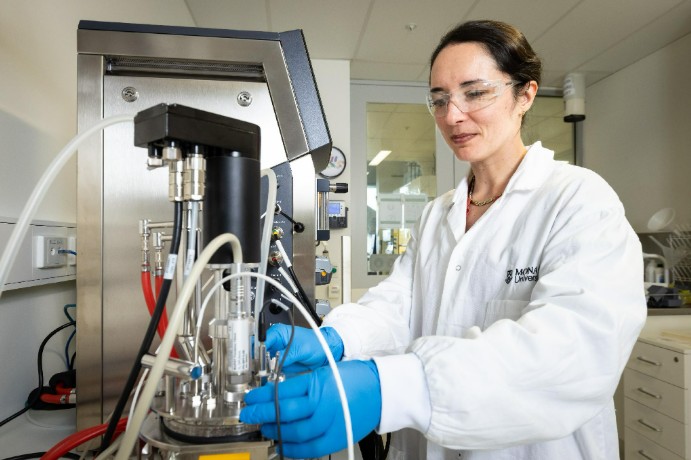
In our laboratory, we work with two soil-dwelling, rod shaped bacteria species with very different tastes. Cupriavidus necator uses sugars to make a stiff, rather brittle polymer similar to polypropylene, called polyhydroxybutyrate (PHB). Pseudomonas putida prefers oils and fats, and makes soft, stretchy, rubbery materials similar to tree sap, known as medium chain length polyhydroxyalkanoates (mcl-PHAs). We feed both of them a carefully balanced diet of waste-derived sugars or waste oils, plus the right blend of salts, nutrients and trace elements, in stainless steel fermenters, more or less the same reactors in which beer is brewed.
Once the microbes have fattened up – some of them swelling up to 30 times their original size – they are packed so full of polymer that, under a microscope, they look like strings of pearls. At this point, we harvest and remove the plastic from them.
The plastic you can compost with your apple core
Growing a polymer is one thing. Making it useful is another.
A stiff plastic makes poor cling wrap. A floppy one makes a poor container. Conventional plastic makers solve this by mixing in additives and by having a whole catalogue of different polymers – compiled over a century – to choose from. Bioplastics like ours have had far less time to develop and therefore they have a far smaller catalogue.
In a recent paper we published in Microbial Cell Factories, our approach was to blend the biopolymers together into thin film plastics [5]. We grew the two bacterial strains separately, extracted their polymers, and defined their material properties. We successfully cast these blends into ultrathin films, around 20 micrometres thick (about a quarter the width of a human hair), thin enough to be a real candidate to replace the soft plastics that Australia struggles most to recycle.
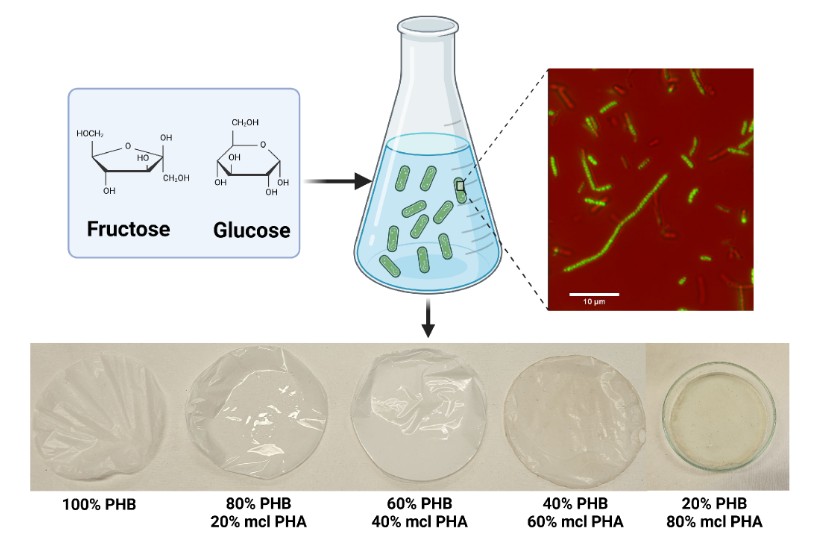
By blending the “stiff” and “stretchy” polymers in different ratios, we found that adding more of the flexible, long-chain polymer from P. putida reduced the polymer crystallinity and glass transition temperature. Crystallinity describes how neatly a polymer's molecules pack together and governs almost everything about how it behaves.
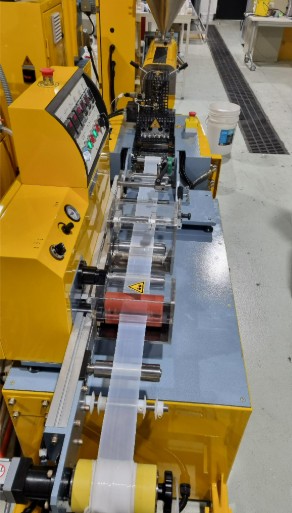
The payoff is a plastic with something conventional thin films do not offer: an ending. These films break down – into water, carbon dioxide and biomass [6] – in a home compost bin or in seawater. Imagine a hash brown factory feeding its own potato waste to bacteria fermenters and wrapping its own chips in the result, so the bag can go into the green bin along with the product. We are working with the Australian Research Council Research Hub for Carbon Utilisation and Recycling, as well as the Value-Added Processing of Carbon Waste hub and industry partners including an Australian company, Enzide, to find out how close that vision really is.
Beyond packaging: PHAs for biomedical applications
But there is another side to this story that surprises people.
Modern medicine increasingly struggles not so much to invent drugs, as to deliver them safely. Fragile molecules like mRNA, the technology behind the COVID vaccines, fall apart in minutes unless something shepherds them into the right region of the body and across cell membranes. That shepherding job currently falls to lipid nanoparticles; tiny fat bodies which can be assembled into various 3D structures that have aqueous (water) rich channels and organic (fatty acid, hydrophobic) rich channels. These materials are brilliant but expensive, often demanding deep-freeze storage and capable of provoking adverse reactions in sensitive tissue or after repeated doses.
PHAs offer an alternative material. When a PHA nanoparticle breaks down in the body, its building blocks turn out to be molecules your own biochemical metabolism already recognises. For instance, 3-hydroxybutyrate, the monomer unit from which PHB is assembled, already circulates in your bloodstream. So the polymer is not a foreign object to be tolerated, more a familiar one to be recycled. Moreover, mcl-PHAs with their lipid-like side chains made us want to explore their potential as sustainable versions of current nanoparticle drug formulations.
In our lab we have built nanoparticles from the soft, oil-derived mcl-PHAs paired with other biomedical polymers [7]. Having established that the particles are stable, the next question was what they could carry. So, we went after mRNA. Here we built what is called a lipid–polymer hybrid nanoparticle, which marries the stability of a polymer particle to the cell-entering talents of lipids.[8]
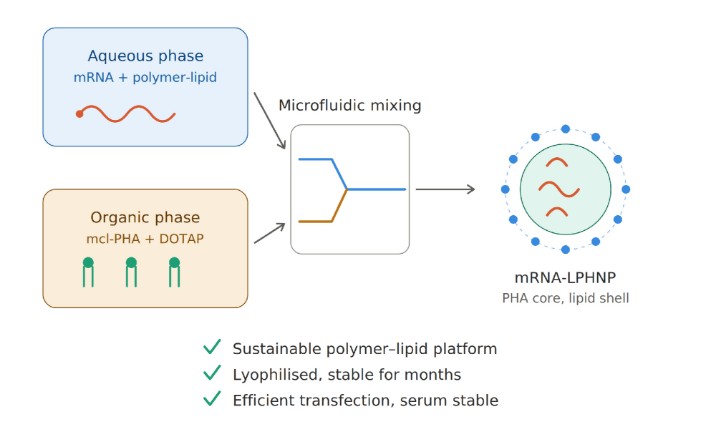
We used a positively charged lipid, DOTAP, to grip the negatively charged mRNA, and assembled the whole thing in a microfluidic device – a chip laced with channels finer than a hair. Where two streams meet, the particles self-assemble in milliseconds. It is precise, reproducible, and importantly for anyone thinking about manufacturing, it can be scaled up.
The results have been very encouraging. The particles delivered working mRNA into human cells, including into cells from the lining of brain blood vessels, which are a notoriously difficult destination. The compounds survived being stored for two months at a range of temperatures without losing their potency, which is hugely important for transportation across a country the size of Australia. Current mRNA vaccines, for instance, require freezer conditions of −80°C. When injected into mice, the mRNA also reached every major organ.
The future of microbial biopolymers
This work is still on the laboratory bench, and the road from a promising thin film wrap and cell culture to approved food packaging materials and medicines will need greater engineering development. Further support from a recent Australian Research Council (ARC) Discovery Project will help us scale up and translate this technology. But the goal of creating a circular cycle for our materials is exciting, so that the same potato peel, fed to the same bacteria, can end up as the bag around the chips or as the particle that carries a medical therapy.
Remember that waste is just a resource we have not worked out what to do with yet.
Liked this? Why not subscribe to RSV and Science Victoria? subscribe.rsv.org.au
References
[1] Food Innovation Australia Limited (2021) The National Food Waste Strategy Feasibility Study – Final Report. https://workdrive.zohopublic.com.au/external/06152b9ff5971843391f39fc4d32a847e56fb907c167a4a645887b0a4bc43000
[2] Karunasena, G.G. & Pearson, D. (2021).Australian household food waste: A summary of behaviours, attitudes, perceived and actual food waste. Fight Food Waste CRC, Adelaide, Australia https://endfoodwaste.com.au/wp-content/uploads/2023/11/Summary-Report_final.pdf
[3] United States Environmental Protection Agency, Importance of Methane. https://www.epa.gov/gmi/importance-methane
[4] OECD (2022), Global plastics outlook. OECD Publishing, Paris https://doi.org/10.1787/de747aef-en
[5] E. Attenborough et al. (2025), Bacterial species-structure-property relationships of polyhydroxyalkanoate biopolymers produced on simple sugars for thin film applications. Microbial Cell Factories 24 (1): 204 https://doi.org/10.1186/s12934-025-02833-7
[6] T. Read et al. (2024), Lifetimes and mechanisms of biodegradation of polyhydroxyalkanoate (PHA) in estuarine and marine field environments. Marine Pollution Bulletin 209: 117114 https://doi.org/10.1016/j.marpolbul.2024.117114
[7] Nur-A-Tomal, Md. S. et al. (2024), Tailoring Pseudomonas putida feedstocks for enhanced medium-chain-length polyhydroxyalkanoate production and biomedical nanoemulsion applications. ACS Sustainable Chemistry &. Engineering 12 (40): 14590–14600doi: 10.1021/acssuschemeng.4c02156
[8] Mazrad, Z.A.I. et al. (2025) Lipid-polyhydroxyalkanoate hybrid nanoparticles as sustainable platform for mRNA delivery. European Journal of Pharmaceutics & Biopharmaceutics 213: 114755. doi: 10.1016/j.ejpb.2025.114755
[9] Banner image from Shutterstock
Other articles of interest



Discover how you can join the society
Join The Royal Society of Victoria. From expert panels to unique events, we're your go-to for scientific engagement. Let's create something amazing.