From the President: Hardening up on plastic solutions
Science Victoria Edition

President, The Royal Society of Victoria
It takes a reasonable grasp of global manufacturing processes and markets to understand that Coca-Cola is more of a packaging company than a ‘brown fizzy drink’ company.
It makes about 1.5 billion PET (polyethylene terephthalate) bottles and containers every day [1] , an estimated global market volume of 27.32 million tonnes of PET packaging annually. And that’s just the PET part of the business. In addition, there are polyethylenes and polypropylenes which are highly recyclable, and epoxies and polyurethanes that are not.
In Australia, our plastics recovery rate is increasing, slowly – but we are consuming more. About 14% is recovered, which is near the global average. But only 423,000 tonnes of the 4 million tonnes we consume is actually recycled [2]. The industry’s own 2025 National Packaging Target was 70% of plastic packaging to be recycled or composted.
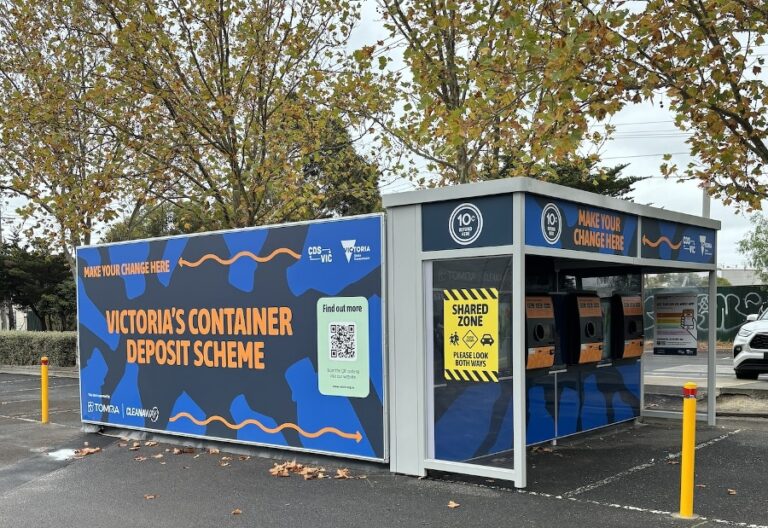
Victoria’s 2023 container deposit legislation has made a difference. The share of returns of plastic containers has grown slightly, but plastics-specific data is not publicly available.
By comparison, the EU’s recycling rate for all plastic packaging is 42.1%; Belgium alone recycles 59.5%! But we are better than the US and their data has a credibility problem anyway. The last published data from the US Environment Protection Authority is for 2020, and recorded an 8.7% national plastics recycling rate.
On any assessment this is an obscene waste of resources and creates a massive global waste problem.
Greenhouse impact
Would that waste were the only problem – unfortunately, the greenhouse (climate) impact is enormous too. The manufacture of virgin PET produces between 2.15 kg and 3.2 kg of carbon dioxide equivalent for every kilogram of PET polymer resin generated. For the entire lifecycle from raw material extraction through manufacturing to waste incineration that figure is somewhere between 3.0 kg and 5.6 kg CO2 equivalent per kilogram of PET.[3]
If you purchase water in a PET bottle on the basis that the package is ‘recyclable’, you are ignoring reality. Knowledge of the climate impact of your purchase alone should lead you to drink water that comes from a tap!
And while recycled PET reduces the carbon load of PET packaging by more than a half, its manufacture nevertheless is an energy-intensive process.
A Global Plastics Treaty?
In March 2022 the United Nations Environment Programme established an Intergovernmental Negotiating Committee [4] in an effort to draw up a global plastics treaty. There have been three rounds of negotiation; the inaugural Chair resigned after the second; the third elected a new Chair. The last meeting in Nairobi (30 June - 3 July) was closed-door and is expected to produce only a non-consensus summary of its discussions.
The identified discussion points are threefold – a cap on production, regulation of some chemicals, and whether regulation should be binding or voluntary. The impasse is between a ‘high ambition’ coalition of about 75 states and a group of petrochemical producing nations resisting production limits. The EU, California and India are moving ahead independently.
In parallel, there is a Business Coalition for a Global Plastics Treaty [5] that includes 330+ businesses, financial institutions and non-government organisations convened by the Ellen MacArthur Foundation and the World Wildlife Fund.
So what can be done?
Do we need to tax waste (on a worldwide basis)? How would that apply in places like Bali [6] where the rivers and streams are choked with the waste left behind by the international tourist industry - mostly plastic.
Attempts to manage the problem through the introduction of circular economy principles, the use of LCA (Life Cycle Analysis) assessments of products and EPR (Extended Producer Responsibility) schemes have been slow. It’s hard to turn around an economic system designed on maximum throughput of ’stuff’.
There is some good news. In Australia, Coca-Cola’s small bottles are now all made of 100% recycled plastic. This is part of a Circular Plastics Australia joint venture with the Pact Group, Cleanaway and Asahi Beverages. Unfortunately Coca-Cola’s 2018 World Without Waste target of 50% recycled materials in all packaging and 100% of packaging being recyclable has now been modified to 35% - 40% recycled content by 2035. Again, Europe is above average.
The biggest step forward is in biological recycling, the enzymatic depolymerisation (breakdown) of PET, which cuts greenhouse emissions by half.[7] It is hoped that this process will eventually be able to deal with mixed feedstocks to enable real ‘closed loop’ recycling.
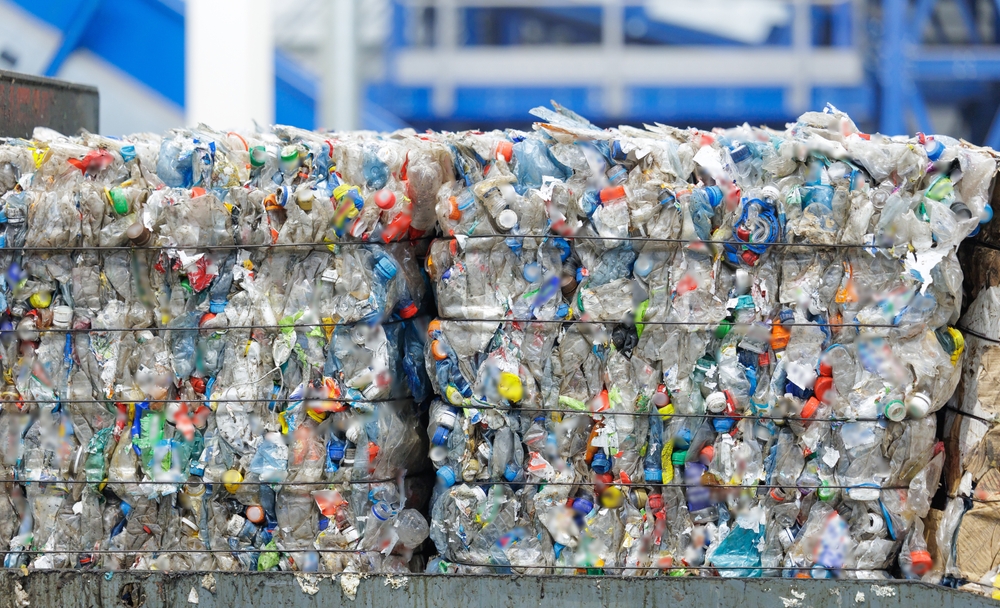
Unfortunately, the largest volume of plastic waste, the polyolefins (polyethylene and polypropylene), are very difficult to recycle. But there are new hydrogenolysis and hydrocracking catalysts that can break them down into liquid hydrocarbons or targeted olefins [8] with considerable benefits in emissions reduction and EPR (circular economy) economics.
These are new, pre-commercial technologies. It remains to be seen whether they can replace the current mechanical-recycling dominated system we have now, and fast enough.
PS: A credit card’s worth of plastic every week - really?
You may have heard that ‘Australian’s are ingesting a credit card’s worth of plastic every week’? The statement is based on a 2019 study that is no longer considered to be accurate.[9] Similarly, the suggestion that ‘each Australian uses 130 kilograms of plastic every year’ is out of date. The Department of Climate Change, Energy, the Environment and Water’s 2022-23 data suggests the number should be 114 kg per capita of plastic waste. A more detailed methodology puts the figure 25% lower, but 85 kg each of us, every year is still a lot.
Enjoy reading this issue of Science Victoria! And if you haven't alreday, please subscribe for free at
subscribe.rsv.org.au
References
[1] Joseph, T.M. et al. (2024), Polyethylene terephthalate (PET) recycling: A review, Case Studies in Chemical and Environmental Engineering 9: 100673. https://doi.org/10.1016/j.cscee.2024.100673
[2] Plastic: Recycling Statistics in Australia 2025, Accumulate Australia
[3] Massoud, D. & Dslivia, J. (2025), Closing the PET plastic recycling loop: A sustainable transformation from plastic to fiber. Next Sustainability6, 100095 https://doi.org/10.1016/j.nxsust.2024.100095
[4] UNEP Intergovernmental Negotiating Committee on Plastic Pollution
[5] Business Coalition for a Global Plastics Treaty
[6] ABC News, June 2026, Bali's beauty sinks beneath an 'Island of Trash' as waste issues increase
[7] University of Portsmouth, June 2025, Breakthrough in enzymatic plastic recycling cuts costs and emissions.
[8] Nature collection, October 2024, Chemical Catalysis for Plastics Recycling and Upcycling,
[9] No, We Don’t Eat a Credit Card’s Microplastics Per Week. How an overly simplistic estimate led to an enduring health myth, Medium, 24 January 2025
[10] Banner image from Shutterstock under licence
Other articles of interest




Discover how you can join the society
Join The Royal Society of Victoria. From expert panels to unique events, we're your go-to for scientific engagement. Let's create something amazing.