De-extinction: Reviving the past to protect the future
Science Victoria Edition





Colossal Australia & School of BioSciences, The University of Melbourne
De-extinction science is stepping off the pages of science fiction and into real life. Technologies that were fictional even a few decades ago are now a reality, completely revolutionising the toolkit we have to fight species extinction.
The goal is not just to resurrect the woolly mammoth or Tasmanian tiger (thylacine), it’s to apply the same powerful technologies to save the species we still have. Because the tools we build to reverse extinction, can also be used to prevent it.
Fuelled by major advances in DNA sequencing, gene editing, and reproductive biology, de-extinction science is now emerging as one of the most important frontiers of conservation science. And nowhere is closer to the action than Victoria, where unprecedented investment has made it the epicentre of de-extinction science in Australia.
From Resurrection to Restoration
De-extinction aims to re-create or re-engineer close biological equivalents of the species of the past by editing the DNA of their nearest living relatives. The first tentative success came in 2003, when scientists cloned the Pyrenean ibex from preserved cells. The newborn survived only a few minutes, but the experiment showed that extinction does not have to be the end of the story.
Since then, the field of de-extinction has evolved rapidly. High-quality genome sequencing allows scientists to compare the DNA of extinct and living species gene by gene. Major advances in sequencing technologies mean that we also know a lot more about how genes are expressed and what they do.
Using advanced tools like CRISPR, we can edit the DNA in a living cell line to make it more like that of a lost species. These edited cells can then be developed into embryos using advanced assisted reproductive technologies and eventually even artificial wombs.
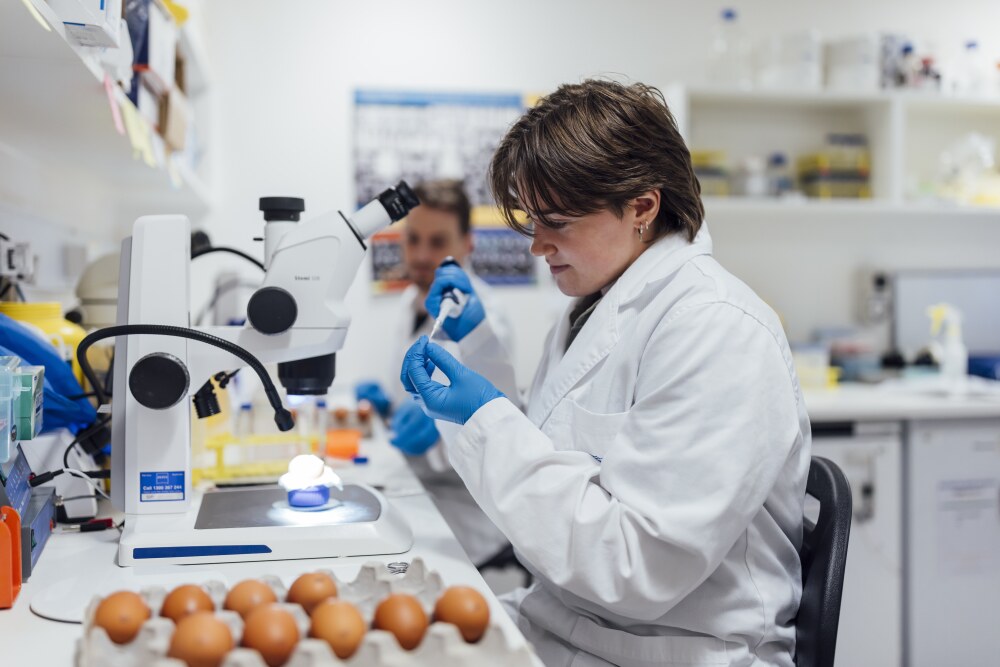
The development of each of these methods adds a critical piece to a much larger toolkit. These technologies may be designed with species revival in mind, but they have enormous potential for modern conservation. When bolstered by the mountains of data generated for de-extinction projects, and integrated with existing knowledge and conservation management programs, the whole enterprise represents a hopeful future for conservation in Australia.
De-endangerment: Using the Toolkit to Save the Living
Every species faces genetic challenges. The DNA carried in its individuals represents all the evolutionary potential it has. And when presented with a challenge to its survival, such as a disease or environmental change, the species must rely on its genes to encode a potential solution. Over time, the individuals with the most beneficial genes are more likely to pass them on, and so the species adapts.
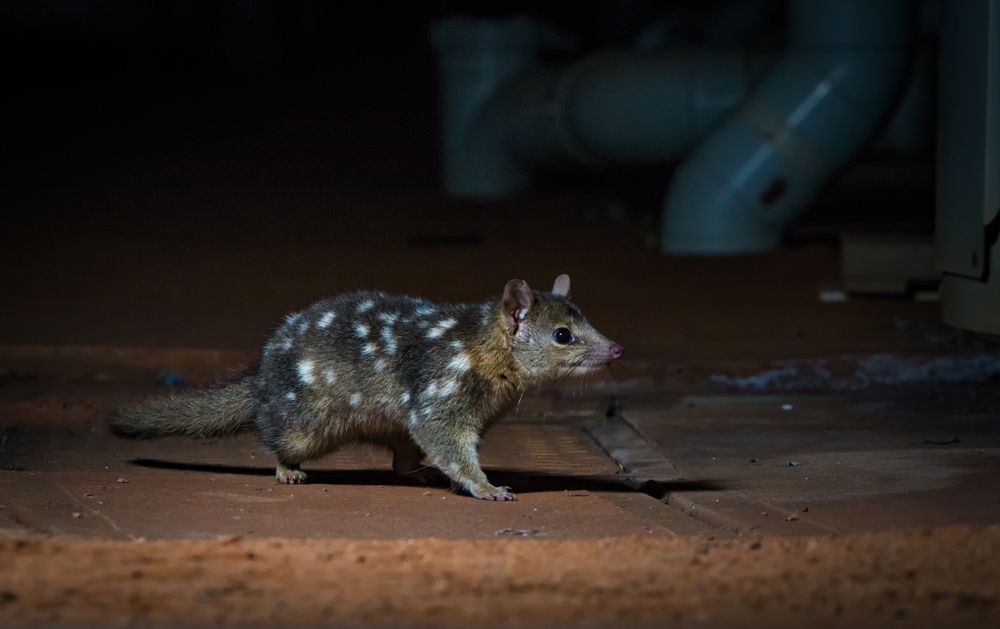
But when populations shrink, as in the case of many endangered species such as the Tasmanian devil or the northern quoll, it’s more likely that related individuals will breed with each other (known as inbreeding). Sustained inbreeding erodes the available genetic diversity in the species by making successive generations more and more alike. And that reduces the potential the species has to adapt, and therefore its ability to resist evolutionary pressures. As long as inbreeding continues, each generation becomes less fit than the last. This can trap populations in what some biologists call an ‘extinction vortex’.
De-extinction science offers a potential way out. The same technology that can re-create an extinct genome can also restore genetic fitness in endangered species suffering from inbreeding. This approach, similar to genetic rescue, would use gene editing to restore lost diversity or eliminate harmful mutations.
The same technologies can be used to reintroduce adaptive traits into struggling populations. In the future, for instance, editing tools like CRISPR might be used to insert genetic variants that allow related species to resist viruses, tolerate heat, or digest new food sources into a struggling population. These targeted interventions could give threatened populations the evolutionary advantage they need to face the catastrophic changes to their ecosystems that we humans have induced.
Many of these technologies are still under development, so what are species to do in the meantime? De-extinction projects must rely on the highest quality reference genomes, and on accurate measurements of the genetic diversity within species both living and dead. Funding for these projects has already improved the quality and quantity of data we have to:
- identify threatened Australian species;
- confirm where they are;
- monitor their population health against accurate baselines; and
- understand their genomes.
These resources, which are freely available to all scientists, are generated using gold-standard technologies usually reserved for model organisms.
By actively facilitating breakthroughs in new and emerging technologies and generating future-proof resources usually out of the reach of current conservation investment, de-extinction has given rise to a new concept: “de-endangerment”. Instead of bringing back what’s lost, we can use the same biotechnology and resources to keep species from disappearing in the first place.
Ecosystem Restoration and Re-wilding
Bringing back lost species is not just about fixing mistakes from the past, it’s also about restoring balance. All species in an ecosystem coevolve as a unit, relying on each other to create and maintain the conditions they require to survive. In Australia, it’s difficult to imagine a more iconic example of the destabilising effect that an extinction can have on an ecosystem, than the demise of the thylacine.
The thylacine was the only mammalian apex predator Australia-wide in its ecosystem. It fulfilled a critical ecological role. When the last thylacine vanished from Tasmania in 1936, it left this role open. Invasive predator species, such as cats and foxes (on the mainland), and pervasive small mammals, such as rabbits, have been able to exploit this vacuum, with devastating consequences for Australian ecosystems.
By restoring such keystone species, we can explore how it might repair damaged landscapes. This type of intervention has already been wildly successful in other places. Reintroducing the apex predator, the wolf, back into Yellowstone National Park in the US brought order back to every level of its unbalanced ecosystem. Given how profoundly this intervention helped Yellowstone, it’s likely that similar interventions could help rebalance Australian landscapes.
Even without reintroducing extinct species, the methods developed for de-extinction — from cloning, to stem-cell-derived sperm and eggs, to improvements in how we manage captive colonies of animals — can all aid re-wilding programs for species on the brink of extinction today.
Northern quolls, for example, are small carnivorous marsupials that occupy the north of Australia. They are currently under threat from the invasion of cane toads, which are poisonous. Quoll populations in the north-east have been particularly decimated by the toads and, in some cases, locally eradicated. De-extinction science may help support northern quoll reintroductions, by improving the odds of survival of the populations.
Artificial intelligence (AI) can also play a critical role here. AI-based satellite and acoustic monitoring not only can track reintroduced animals, but monitor how they influence vegetation, soil, and other species. These data-driven insights can allow ecologists to manage these reintroductions adaptively, ensuring that interventions strengthen ecosystems rather than disrupt them.
Catalysing Collaboration, Conservation and Education
De-extinction research inspires collaboration between universities, zoos, museums, and biotechnology companies. Those partnerships in Victoria have already accelerated the progress of genetic and reproductive science in understudied Australian species which, in turn, benefits endangered species and their habitats.
The de-extinction work also has proven to be a catalyst for science education and engagement. The story of bringing species back from extinction resonates with students and provides a hopeful narrative to counter biodiversity loss. Museums, zoos, and classrooms increasingly use de-extinction examples to teach genetics, ecology, and ethics, showing how technology and conservation intersect in real life.
Looking Ahead: A Future of Integrated Conservation
As genome engineering and reproductive technologies mature, their integration into mainstream conservation will reshape how we protect biodiversity. The most immediate benefit will come from applying these tools before extinction occurs – editing disease-resistance genes into frogs facing the deadly chytrid fungus, for instance, or generating tolerance to cane toad toxin in endangered marsupials, or freezing cell lines to preserve genetic diversity.
Ultimately, de-extinction research demonstrates that the boundaries between resurrection biology and traditional conservation are blurring. Whether it’s restoring health to genomes, reviving lost traits, or preventing future extinctions, all share a single purpose: to rebuild resilient ecosystems on a rapidly changing planet.
The technology developed to recreate the past is now helping secure the future. From genetic rescue and ecosystem restoration to education and global collaboration, de-extinction’s legacy may not be the return of the mammoth or the thylacine, but the birth of a new kind of conservation, integrating current practices with cutting-edge science. In a century defined by species loss, de-extinction science offers hope and a means of restoring what once was.
Other articles of interest






Discover how you can join the society
Join The Royal Society of Victoria. From expert panels to unique events, we're your go-to for scientific engagement. Let's create something amazing.